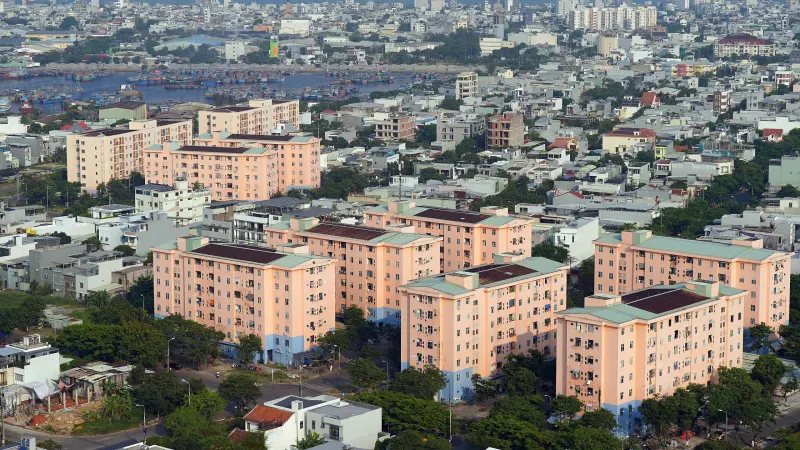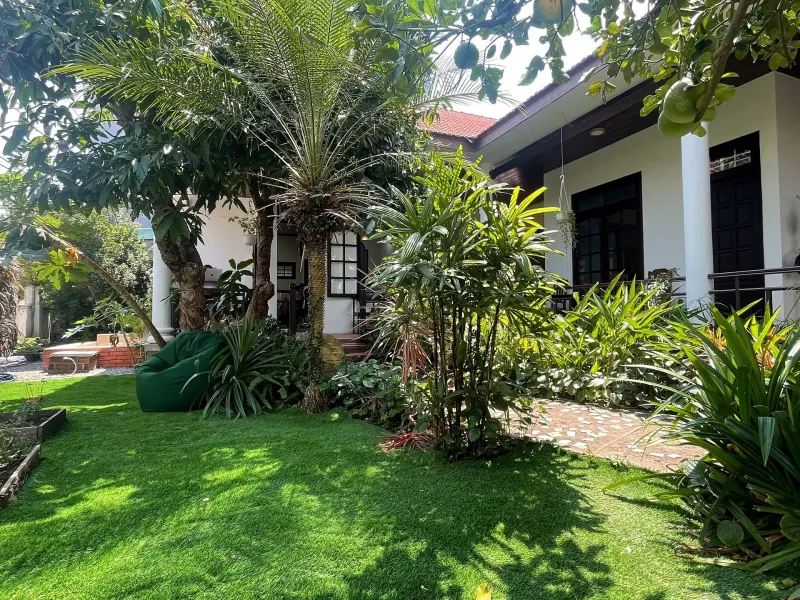

You work remotely for an employer or clients abroad and plan to spend a few months in Da Nang (Đà Nẵng). For a Da Nang digital nomad, the neighborhood and the coworking space come later. The first question is which visa to enter on, and whether working online from Vietnam raises a legal issue. Then comes tax: at some point your days in the country start to count.
Several Vietnamese rules that affect a long stay changed in 2026, among them an amendment to the immigration law and a new personal income tax law. This guide goes through what those texts say, then covers internet, where remote workers base themselves and where they meet. It describes the texts and is not legal or tax advice.
Is there a digital nomad visa for Vietnam?
The first decision is which visa to enter on, since that sets how long you can stay. As of October 26, 2026, Vietnam's immigration law lists no digital nomad visa, so a remote worker enters on the same options as other foreigners: an e-visa valid for up to 90 days or a visa exemption. The length of an exemption depends on your nationality: 45 days from the day of entry for countries Vietnam exempts on its own, and the period set by each bilateral agreement, such as 30 or 90 days, for countries with an agreement. Some exemptions come with a condition on the purpose of entry. For ordinary passports, the agreements with Chile and Panama (90 days) and Mongolia (30 days) apply only if the entry is not for income-earning activities, and the one with Singapore (30 days) does not apply to entry to work for income. The 45-day exemption for 12 European countries under Resolution 229/NQ-CP is for tourism. The Ministry of Foreign Affairs list gives the terms for each country.
An e-visa can be valid for single or multiple entry. Visa fees under Circular 28/2026/TT-BTC, in force since April 1, 2026, are US$25 for a single-entry visa and US$50 for a multiple-entry visa valid for up to 90 days. UK citizens can visit without a visa for up to 45 days for tourism or business, while US and Australian citizens traveling on ordinary passports are not on the exemption lists and need a visa such as the e-visa.
Law 118/2025/QH15, which took effect on July 1, 2026, added two visa types, UĐ1 and UĐ2, valid for up to 5 years. UĐ1 is for foreigners who are high-quality digital technology industry workers and for cases given priority by law or by resolutions of the National Assembly or its Standing Committee, and UĐ2 is for the spouse and children under 18 of a UĐ1 holder. An applicant for UĐ1 must hold papers proving they are a high-quality digital technology industry worker under the Digital Technology Industry Law, or papers proving they are in a priority group. The law does not mention remote work.
Two other ideas have been reported, and neither is a visa you can apply for. In a July 2026 interview with VnEconomy, a speaker identified as a representative of VPCA proposed that Vietnam study a "Remote Talent Visa" for qualified experts, entrepreneurs and investors who live in Vietnam while working remotely for companies or clients abroad. The speaker said the program would need conditions such as proof of income, a clean criminal record and compliance with tax and immigration rules. The interview presents the visa as a proposal and does not report that any agency has adopted it.
Decree 221/2025/ND-CP, dated August 8, 2025, created a special visa-exemption card valid for up to 5 years with multiple entries. News reports of the decree list seven categories, including scholars, high-quality digital technology workers, investors and company leaders, and say that an agency or organization, not the foreigner, sends the notice or written request for the card to the Ministry of Public Security.
Working online in Vietnam: what the law says
A remote worker who enters on an e-visa or a visa exemption still has to keep to the purpose of that entry, so the question is whether working online fits it. Vietnamese law does not answer it in so many words: the immigration law requires a foreigner's activities to match the purpose of entry, neither that law nor the foreign-worker decree has wording on remote work for an employer abroad, and some visa-exemption agreements exclude entry for income-earning activities without saying whether remote work counts.
Under the Law on Entry, Exit, Transit and Residence of Foreigners, a foreigner's activities in Vietnam must match the purpose of entry (Article 44). A foreigner who breaks that rule has the papers that allow entry, exit and residence revoked or canceled (Article 6). The law does not define remote work or say whether it fits the purpose of entry on an e-visa or a visa exemption.
Separately, the Labour Code requires a foreign worker in Vietnam to hold a work permit unless an exemption in Article 154 applies (Article 151), and says a foreign worker without a permit will be forced to leave the country or be deported (Article 153). Decree 219/2025/ND-CP, in force since August 7, 2025, defines a foreign worker in Vietnam as a foreigner who comes to work in listed positions under one of several forms, including an employment contract, an intra-company transfer, a contract to provide services, and being transferred from an agency, organization or company abroad to work in Vietnam. The decree has no wording on remote work for an employer or client abroad. Neither the immigration law nor Decree 219/2025 says whether remote work for an employer abroad is allowed or needs a work permit.
For foreigners who do need a work permit, Decree 283/2026/ND-CP, in force since September 10, 2026, sets a fine of 15,000,000–25,000,000 VND (about US$581–969) for working in Vietnam without a work permit or without a confirmation that no permit is required, and lists deportation as an additional penalty for that violation.
Government News reported on October 21, 2026 that Decree 393/2026/ND-CP, signed on October 20, also regulates foreign workers in Vietnam and takes effect on December 5, 2026. If your stay runs past that date, check which work permit rules apply.
Safety note: the texts above do not say whether your own remote work needs a work permit. This guide suggests asking an immigration office or a licensed Vietnamese lawyer before you rely on any reading of them.
Staying longer than 90 days: extensions and visa changes
If you want to stay in Da Nang past the end of your e-visa or visa-exempt stay, the law lets you ask for more time but does not promise it. An extension of stay goes through the organization or person that invited or sponsors you, and the immigration office considers the request within 5 working days of receiving a complete file.
Article 35 of the immigration law says a foreigner who wants an extension must ask the inviting or sponsoring agency, organization or individual to file it. It does not state how long an extension lasts or how many you can get. An extension costs US$10 each time. The official e-visa site says in English that e-visa holders in Vietnam may be considered for a new visa if an authority, organization or individual in Vietnam invites or guarantees them.
A visa's purpose can be changed in only four cases (Article 7):
- you are an investor or the representative of a foreign organization that invests in Vietnam, with papers to prove it;
- you can prove you are the parent, spouse or child of the person who invited or sponsors you;
- an agency or organization invited you to work and you hold a work permit or a confirmation that none is needed;
- you entered on an e-visa and hold a work permit or such a confirmation.
The new visa is issued under the Article 19 procedure, which again goes through the party that invites or sponsors you. A temporary residence card valid for up to 2 years costs US$145, but it is only for people on work, investment, study, family and similar visas, and the sponsor applies for it; tourist visas and e-visas do not qualify.
Overstaying is fined by length under Decree 282/2025/ND-CP: 500,000–2,000,000 VND (about US$19.5–77.5) for under 16 days and 5,000,000–10,000,000 VND (about US$194–388) for 16 days to under 30 days, and deportation can be added for an overstay of 16 days or more.
When you become a Vietnam tax resident
Days spent in Da Nang can make you a Vietnam tax resident even when your employer and clients are abroad. Under Law 109/2025/QH15, you are a tax resident if you are in Vietnam for 183 days or more in a calendar year or in 12 consecutive months from your first day in the country, or if you have a regular residence there, which includes a registered permanent residence or a home rented under a lease with a fixed term. Residents pay personal income tax on taxable income earned both in and outside Vietnam.
Decree 253/2026/ND-CP, in force since July 1, 2026, counts the day you arrive and the day you leave as one day each, and an entry and exit on the same day as one day. The decree also counts rented homes: a foreigner with no residence-card address who rents housing for a total of 183 days or more under rental contracts in the tax year is also a resident, even if the days are spread over several places, and hotels, guesthouses, motels and boarding houses count as rented housing whether you or your employer rent them.
A person with a regular residence in Vietnam who is present for fewer than 183 days in the tax year is still a Vietnam resident unless they can show they are a resident of another country. That proof is a certificate of residence or, for a country that has a double-tax treaty with Vietnam but issues no such certificate, a copy of the passport.
For countries that have signed a double-tax treaty with Vietnam, tax already paid abroad is deducted from the tax owed in Vietnam as the treaty provides. How much is deducted depends on the treaty, so this guide suggests asking a tax adviser in your home country and one in Vietnam. The tax law took effect on July 1, 2026, and its rules on salary and business income of residents apply from the 2026 tax year.
Registering your stay
Wherever you sleep in Da Nang, someone has to tell the police you are there. A foreigner's stay is registered through the person who directly manages the hotel, guesthouse or rental, who declares it to the police of the ward or commune where it is, and that place must ask to see your passport and residence papers before agreeing to let you stay. Under Circular 87/2026/TT-BCA, in force since July 24, 2026, an online declaration must be made immediately when the foreigner arrives. The steps and fines are in the guide to temporary residence registration in Da Nang.
Where remote workers base themselves
Match the neighborhood names you read online to the wards in place since mid-2025 before you search for housing. Vietnam ended its district level of government on July 1, 2025, so since then an address names a ward. On that date, My An ward, which included the An Thuong area, and Khue My ward became part of Ngu Hanh Son ward (phường Ngũ Hành Sơn). The old Phuoc My, An Hai Bac and An Hai Nam wards on the Son Tra (Sơn Trà) side of the river form An Hai ward (phường An Hải). The guide to districts and wards has the full list.
The guidebook of the Da Nang Nomad Fest, written by the festival's organizers, says most nomads stay in the My An area around the An Thuong streets, where many coworking spaces, laptop-friendly cafes and community activities are, and that others stay in the Son Tra area near My An or the Dragon Bridge (Cầu Rồng), or 10 or more minutes from My An by motorbike, where it says apartments are better and more affordable. It advises against booking a place on the bar street if you want peaceful nights.
Nomads.com names Khue My ward in Ngu Hanh Son as the best neighborhood to stay and, in a summary on its Da Nang page, says some reviewers warn against staying in An Thuong because of noise, crowds and construction. A long-term resident quoted by Business Insider in October 2025 lives on the city side of Da Nang rather than the beach side because it is cheaper, about a 10-minute drive from the beach.
For prices, see the coworking guide: of its nine spaces, four are in Ngu Hanh Son ward and three in An Hai ward, and the lowest set monthly price for a shared desk is 2,000,000 VND (about US$77.5). Studio apartments in central districts averaged about 6,000,000 VND (about US$233) a month and units with bedrooms reached up to 12,000,000 VND (about US$465), according to a May 2026 report from Vietnam's national news agency that did not say where the figures came from. The renting guide and the cost of living guide have more.

Internet speed and the August 2026 cable faults
Test the connection before you commit to a month's rent, and keep a second way online. Ookla's Speedtest Global Index for August 2026 put Vietnam's median mobile download speed at 219.93 Mbps, ninth in the world, and its median fixed broadband download speed at 301.48 Mbps, eighth in the world, against a global fixed broadband median of 129.68 Mbps. These are national medians, so they say little about the connection in a particular apartment. Nomads.com's page for Da Nang showed an average of 7 Mbps and labeled it slow.
The latest reports used here, dated August 28 and 31, 2026, describe faults on international links. On August 25, 2026, the SJC2 undersea cable developed a fault, and VnExpress reported that three other cables serving Vietnam, AAE-1, AAG and Intra Asia (IA), also had problems. Light Reading reported that the four faults caused a 30% loss of international Internet capacity in Vietnam. Network provider VNPT said access would be affected to some extent during peak hours and that pages, streaming and games hosted on overseas servers might load slower, though services generally stay stable because of backup links.
Repair on the IA cable was expected to start in early September, and as of August 31, 2026 no repair schedule had been announced for SJC2, AAE-1 and AAG. VnExpress noted that undersea cable repairs typically take several months to half a year.
If your work depends on servers abroad, this guide suggests testing video calls at peak hours before you sign a long lease and keeping a mobile data plan as a backup; see the guide to SIM cards and eSIMs in Da Nang. For home internet, FPT lists fiber from 195,000 VND (about US$7.5) a month for a 300 Mbps plan, and says foreigners signing up need a passport and a valid temporary or permanent residence paper.
Meeting other remote workers
Start with the two Meetup groups and the weekly events listed on Nomads.com, all checked on October 26, 2026. Digital Nomads in Da Nang on Meetup had 1,553 members and 270 past events. Its four latest listed events, on Fridays at 7:00 pm in the Son Tra area from July 10 to August 21, drew between 7 and 30 attendees.
International Friends Da Nang had 1,552 members. It holds in-person meetups once a month or every two weeks and online meetups in the other weeks, and its latest two events, on October 18 and 25, were online with 10 and 8 attendees. Nomads.com lists a co-working session every Tuesday from 11:00 am to 3:00 pm at a beach cafe and a pitch session every Friday at ACE Hub; on October 26, 2026 the next Tuesday session had 3 people going and the last Friday session listed, on October 16, had 5 attendees.
The Da Nang Nomad Fest website lists the next festival as March 19–28, 2027, a 10-day event for online freelancers and solopreneurs. Its website names two organizers: the founder of Nomad365 and Remote Work International, whose profile on the site also names the Da Nang Innovation Hub, and a career coach who co-founded the Da Nang Nomad Fest. Danang Fantasticity's March 5, 2025 post on the 2025 festival names Da Nang 365 and Nomad365 as organizers.
When to come: the rainy season
Choose your arrival month with the rainy season in mind. The city government says September to December together bring more than 70% of the year's rain and that floods usually come from September to November. At the city's weather station, October is the wettest month, averaging 628 mm of rain on about 20 rainy days. The rainy season guide and the best time to visit guide have the month-by-month numbers.
Sources and how we checked
We used the texts of laws and decrees as published in the Official Gazette or on government news sites, and the pages of the groups and events described, all checked on October 26, 2026. News reports, not the decrees themselves, were used for Decree 221/2025 and Decree 393/2026, and the Ookla figures come from a press report because Ookla's own site was not opened. The latest reports on the undersea cable faults used here are dated August 28 and 31, 2026. The legal and tax paragraphs describe what the texts say and are not advice for your case. US dollar amounts use Vietcombank's transfer rate of 25,800 VND per US$ on October 1, 2026, rounded to the nearest cent below US$1, US$0.5 up to US$100, US$1 up to US$10,000 and US$1,000 above that.
- Immigration law: consolidated Law on Entry, Exit, Transit and Residence of Foreigners (30/VBHN-VPQH, Official Gazette, November 29, 2023, in Vietnamese) and Law 118/2025/QH15 (December 10, 2025, in force July 1, 2026, in Vietnamese, republished by a private legal site).
- Visas and fees: Vietnam Government News, new immigration fees (March 31, 2026, in Vietnamese) and Resolution 44/NQ-CP on visa exemptions (March 7, 2025, in Vietnamese); Resolution 229/NQ-CP on visa exemptions for tourism (August 11, 2025, in Vietnamese); Ministry of Foreign Affairs, list of visa-exempt countries (in Vietnamese); UK government, entry requirements (September 21, 2026); the official e-visa site.
- Visa proposals: VnEconomy, interview on attracting international experts (July 15, 2026, in Vietnamese); Decree 221/2025/ND-CP as reported by Nhà đầu tư (August 9, 2025) and Thị trường tài chính tiền tệ (August 11, 2025), both in Vietnamese.
- Work permits: Labour Code 45/2019/QH14 (in Vietnamese); Decree 219/2025/ND-CP (Official Gazette, August 20, 2025); Decree 283/2026/ND-CP on penalties (Official Gazette, July 28, 2026); Vietnam Government News, report on Decree 393/2026/ND-CP (October 21, 2026); all in Vietnamese. We searched the full text of the consolidated immigration law, Law 118/2025 and Decree 219/2025 for the Vietnamese words for "remote" and found no match.
- Overstay fines and registration: Decree 282/2025/ND-CP (Official Gazette, November 17, 2025); report on Circular 87/2026/TT-BCA (June 21, 2026); the Ministry of Public Security's declaration site; all in Vietnamese except the declaration site.
- Tax: Law 109/2025/QH15 on personal income tax (Official Gazette, January 22, 2026) and Decree 253/2026/ND-CP (Official Gazette, July 16, 2026), both in Vietnamese.
- Wards: Resolution 1659/NQ-UBTVQH15 on the 2025 ward mergers, as checked in the districts and wards guide; Danang Fantasticity, opening of the An Thuong walking street (July 17, 2023, in Vietnamese).
- Where to stay: Da Nang Nomad Fest, Da Nang Digital Nomad Guide 2026 (undated, published by the festival's organizers); Nomads.com, Da Nang page; Business Insider, a long-term resident's story (October 27, 2025); VnExpress International, living costs for digital nomads in Da Nang (May 7, 2026); coworking details from the coworking guide (October 3, 2026).
- Internet: VietNamNet, report on Ookla's August 2026 index (October 14, 2026); VnExpress International, fourth undersea cable fault (August 28, 2026); Light Reading, four subsea cable faults (August 31, 2026); FPT, home internet plans (in Vietnamese, checked October 3, 2026).
- Meetups: Digital Nomads in Da Nang and International Friends Da Nang on Meetup; Nomads.com, Da Nang meetups; Da Nang Nomad Fest; Danang Fantasticity, Vietnam Nomad Fest 2025 (March 5, 2025). Meetup pages show no year for event dates and member counts include inactive accounts.
- Rain: Da Nang city government, climate page (May 4, 2026, in Vietnamese); the monthly averages are from QCVN 02:2022/BXD, as used in the rainy season guide.
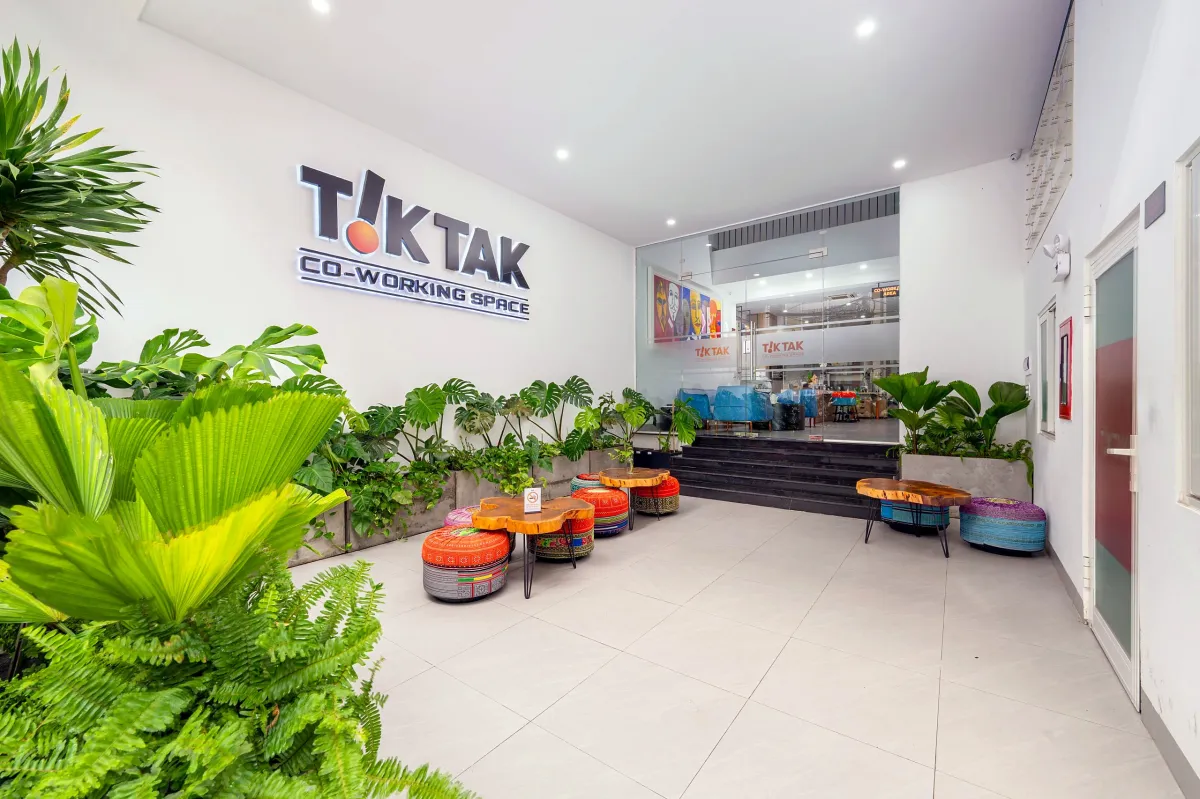
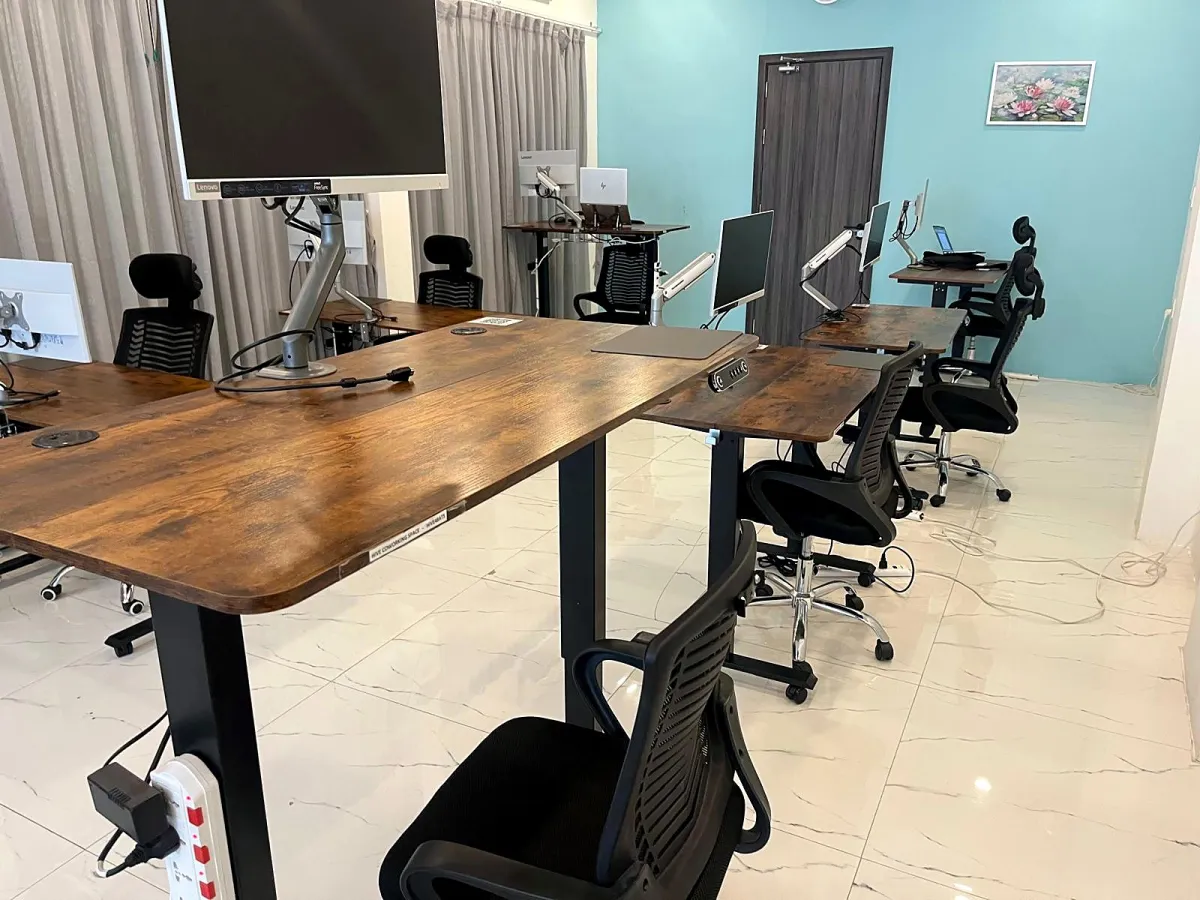
- Photos: Tiktak Co-working Space, photo gallery; HIVE Coworking Space, website; Enosta Space, coworking page, all viewed October 26, 2026.
Updated: October 28, 2026