

Some visitors want to cross the Hai Van Pass (đèo Hải Vân) between Da Nang and Hue as fast as they can; others have a morning to spare and want the views. The two rarely point to the same route, so which one suits your day, and what will you find at the top?

How to visit the Hai Van Pass from Da Nang
Decide first whether you want the views or just the fastest way north. To visit the Hai Van Pass from Da Nang, drive or ride about 20 km (12 miles) north on National Route 1A to the foot of the pass and take the pass road up; a car reaches the top in about 30 minutes.
The pass road is 20–21 km (about 12–13 miles) long, climbs to about 500 m and crosses the line between Da Nang and Hue. Each time below covers a different stretch, as the notes in the cells say.
| Way across | Time | What to know |
|---|---|---|
| Car or taxi over the pass | About 30 minutes from Da Nang to the top | Ask the driver to take the pass road, not the tunnel |
| Motorbike over the pass | About 45–60 minutes for the 20 km (about 12 miles) of pass road, depending on speed and photo stops, after about 20 km (12 miles) from the city | Check the license rules below |
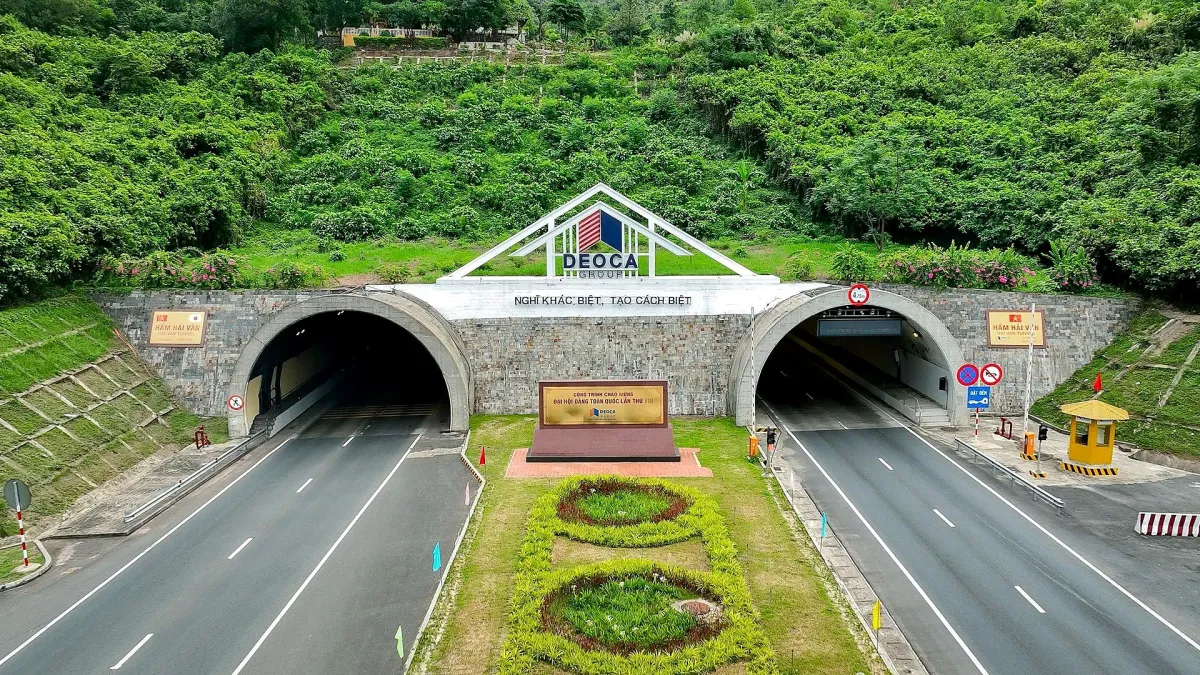
| Hai Van road tunnel | About 10 minutes through the tunnel | Quickest for a car, but skips the pass road; motorbikes are not allowed |
| Heritage train between Hue and Da Nang | About 3–4 hours from end to end | 180,000–500,000 VND (about US$7–19.5) a ticket; see fares below |
If you want the views, take the pass road; if you only need to get north by car, the tunnel is the quicker way.
Hai Van Gate: entry fee and opening hours
Budget 70,000 VND (about US$2.5) per adult for Hai Van Gate (Hải Vân Quan), the old gate on the summit. Since June 2, 2026, the fee has been charged per visit, the same for Vietnamese and foreign visitors, and is collected by the Hue Monuments Conservation Center; the rate is set until the end of 2028.
The center's price list shows children aged 7 to 12 as free, while news reports give a different age cutoff (under 13) or a height cutoff (under 1.2 m) for free entry, so ask at the gate. The gate is open from 7:00 am to 5:30 pm every day, according to a June 2026 VnExpress report citing the center. It was built in 1826 under Emperor Minh Mang on the site of an older pass fort, became a national relic in 2017 and reopened to visitors on August 1, 2024, after restoration.
Driving or riding over the pass
Leave early or in the mid-afternoon if you want the light. Set off around 6–7 am to reach the top for sunrise, or around 3–4 pm to arrive before sunset.
Safety note: Da Nang's tourism portal says the pass road is fairly winding and steep, and recommends limiting trips in the evening or in thick fog.
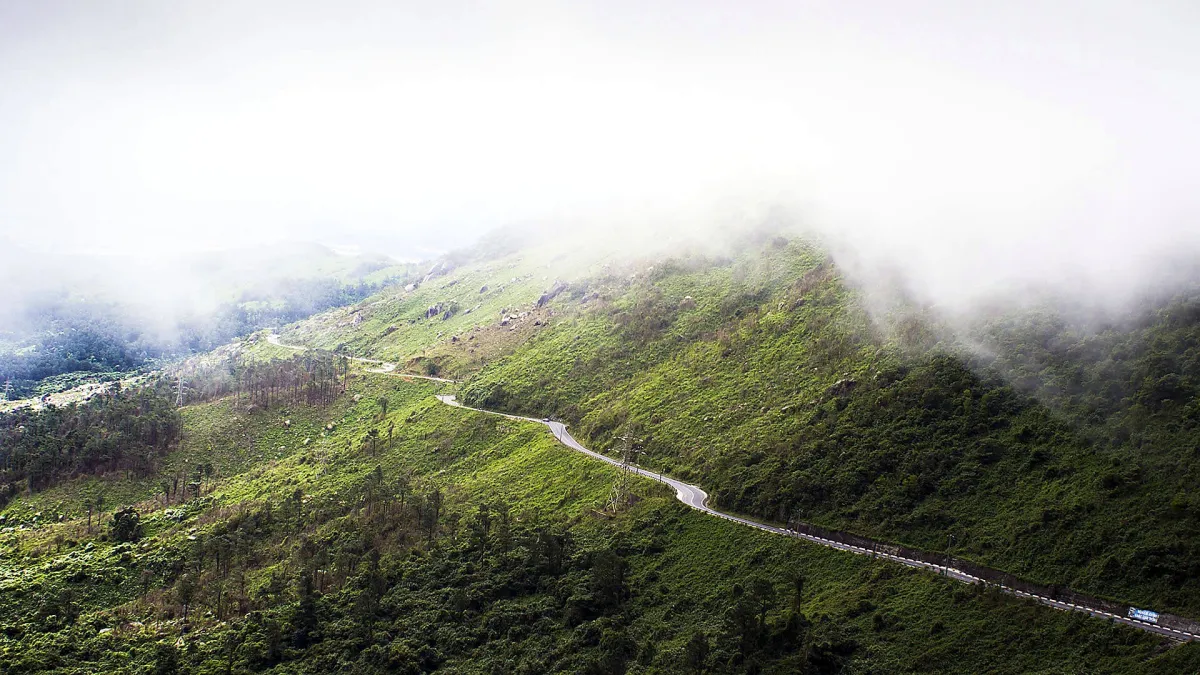
On the Da Nang side, the first bend up the pass is the Cu Rua rock viewpoint (mỏm đá Cụ Rùa) over Da Nang Bay (vịnh Đà Nẵng) and the Son Tra peninsula (bán đảo Sơn Trà). Near the foot on the Da Nang side, Nam O is known for its raw fish salad (gỏi cá Nam Ô).
From the top you can look south over Da Nang or north to Lang Co bay. From the roadside cafes you can see Lang Co bay and the Lap An lagoon (đầm Lập An) in the distance.

Check the license rules before you rent a motorbike. Vietnam accepts a Vietnamese license, or an international driving permit issued under the 1968 Vienna Convention carried with a valid home license that covers the bike. Licenses from countries that have a recognition agreement with Vietnam can also count. The United States and Australia are not parties to the 1968 convention, and the US Embassy tells Americans that foreign licenses, even with an international driving permit, are not valid.
The motorbike rental guide explains which licenses work, the fines and what the insurance covers. If you are not used to mountain roads, hire a driver or join a motorbike tour.
Motorbikes cannot use the Hai Van tunnel, though a service carries motorbikes through it. Cars can choose: the tunnel takes about 10 minutes, against nearly 30 minutes over the pass. Most intercity buses use the tunnel, so ask a private driver or taxi to take the pass road if you want the views. The main tunnel, 6,280 m long, opened on June 5, 2005.
Crossing the pass by train
Take the heritage train if you would rather cross the pass by rail than by road. Vietnam Railways runs it under the name Hành trình kết nối di sản miền Trung (literally, the journey connecting Central Vietnam's heritage). It links Hue and Da Nang over the pass in about 3 to 4 hours, with two trains each way a day. The timetable on the booking site shows trains from Hue at 7:05 am and 2:30 pm, and from Da Nang at 7:05 am and 3:20 pm.
Tickets cost 180,000–400,000 VND (about US$7–15.5) early in the week and 220,000–500,000 VND (about US$8.5–19.5) at the weekend, according to a March 26, 2026 news report. They are sold at ketnoidisan.dsvn.vn, and prices can change with fuel costs. The timetable also lists shorter legs to and from Lang Co, such as Lang Co to Da Nang.
Falling rocks on the railway over the pass temporarily stopped trains on the Hai Van to Hai Van Nam (Hải Vân Nam) section in mid-March 2026, so check the timetable on the booking site a day or two before you travel. Regular North–South trains also cross the pass on the same line.
Weather and closures on the pass
Pick a dry day if you can. Da Nang's tourism portal gives roughly March to August as the dry season for the pass and September to December as the season of rain and storms.
Safety note: The pass road has been closed to people and vehicles before. In October 2023, after a landslide, they were not allowed up it, according to a Phap Luat report.
See the best time to visit Da Nang for rain by month, and things to do in Da Nang for other day trips from the city.
Sources and how we checked
We started from official sources and added dated news reports where the official pages were silent. We checked each source on October 2, 2026. Danang Fantasticity (Da Nang's official tourism portal) covers the route, travel times, stops, seasons and safety advice. The Hue Monuments Conservation Center covers the gate's fee, and VnExpress and Phap Luat cover its hours and the child cutoffs. Vietnam Railways' booking site and news reports cover the heritage train, and Da Nang's city government covers the tunnel. Vietnam's road traffic law, the United Nations treaty list and the US Embassy cover driving licenses. Sources give the height of Hai Van Gate as 490 m, 496 m or more than 500 m; for the pass we use Danang Fantasticity's figure of about 500 m. US dollar amounts use Vietcombank's transfer rate of 25,800 VND per US$ on October 1, 2026, rounded to the nearest cent below US$1, US$0.5 up to US$100, US$1 up to US$10,000 and US$1,000 above that.
- Danang Fantasticity (in Vietnamese): Hai Van Pass (August 1, 2025).
- Hue Monuments Conservation Center: ticket prices, from June 2, 2026; reopening notice (July 29, 2024, in Vietnamese).
- News reports (in Vietnamese): Tuoi Tre, fee from June 2 (May 30, 2026); VnExpress, fee and opening hours (June 1, 2026); Phap Luat, fee and free entry (June 1, 2026); Dai Bieu Nhan Dan, heritage train prices (March 26, 2026); Thanh Nien, trains stopped by falling rocks (March 14, 2026); Phap Luat, landslide on the pass (October 13, 2023).
- Vietnam Railways, heritage train timetable and booking (in Vietnamese; timetable as shown on October 2, 2026).
- Da Nang city government, the Hai Van tunnel (December 5, 2013, in Vietnamese).
- US Embassy and Consulate in Vietnam, driving in Vietnam (viewed October 2, 2026).
- Driving licenses: Law on Road Traffic Order and Safety, consolidated text (Official Gazette, in Vietnamese, April 9, 2026); United Nations Treaty Collection, Convention on Road Traffic, Vienna 1968, status (viewed October 2, 2026).
- Photos: Danang Fantasticity, Hai Van Pass (August 1, 2025).
Updated: October 3, 2026