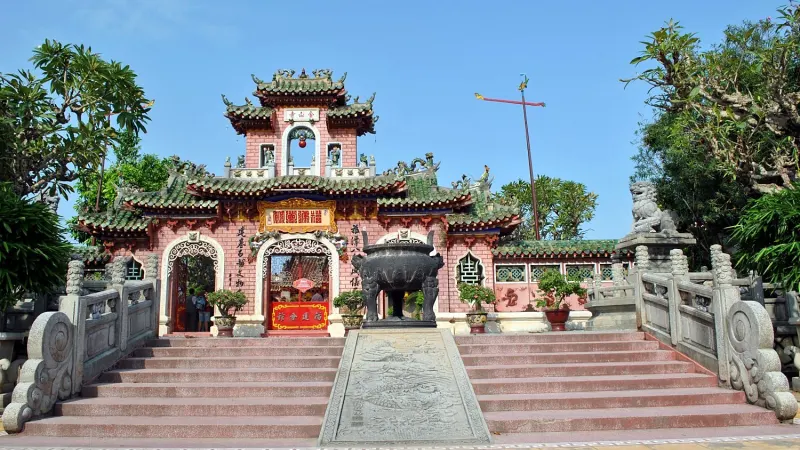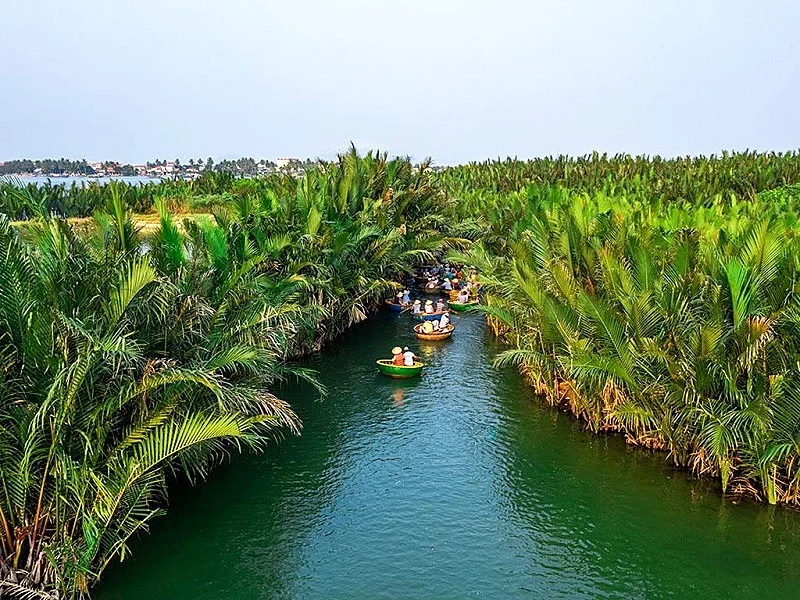

The entry fee for Hoi An Ancient Town (phố cổ Hội An) changed twice in 2026, so a price from a guide written before August 2026 may be out of date. Before you walk in, it helps to know what the fee covers and when each part of the old town is open.
This guide covers the 2026 fee and tickets, the hours for the walking streets, museums and the Japanese Covered Bridge (Chùa Cầu), and the evening lanterns, boats and night market. Hoi An has been part of Da Nang city since July 1, 2025, and the old town is in Hoi An ward.
How much the Hoi An Ancient Town ticket costs
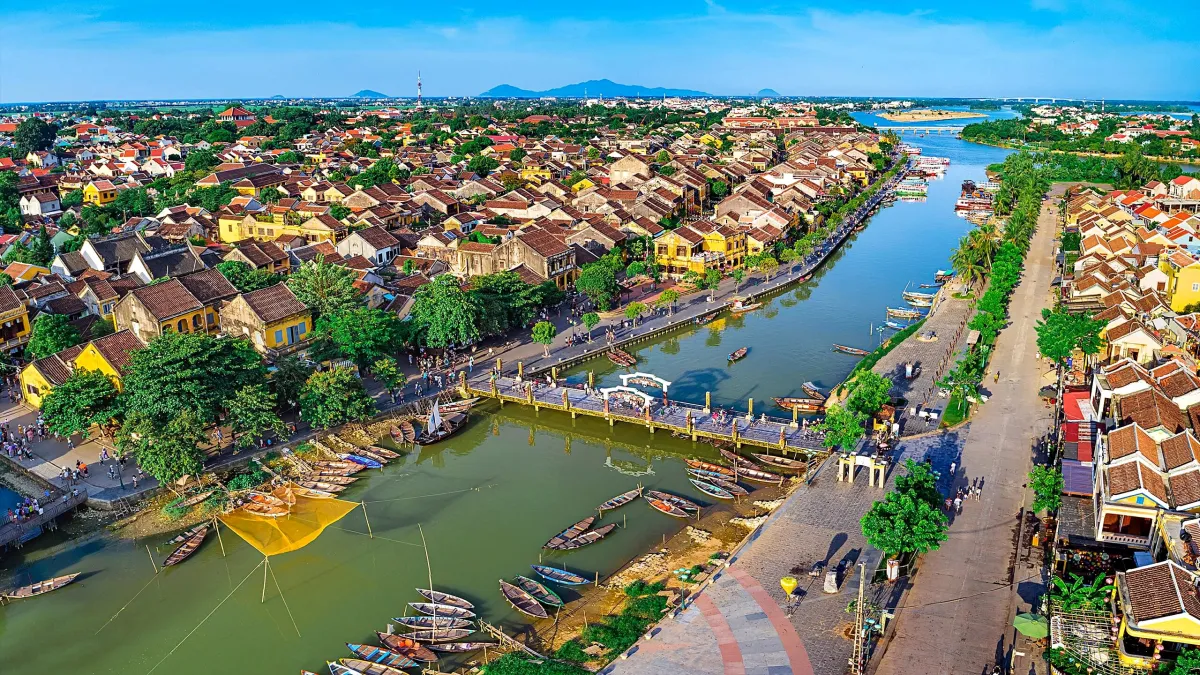
Plan which heritage sites you want to enter, such as the Japanese Covered Bridge, Quan Cong Temple or a museum, because each ticket covers a fixed number of them. The Hoi An Ancient Town ticket costs 80,000 VND (about US$3) for three sites or 120,000 VND (about US$4.5) for five, plus the old town streets, and the price is the same for Vietnamese and foreign visitors.
Since August 10, 2026, a Da Nang city resolution of July 31, 2026 has set the heritage fee at 20,000 VND (about US$0.78) per person for each site, the same for everyone; it replaced the February 2026 range of 20,000–30,000 VND (about US$1) per site. In April 2026, the city's newspaper reported that the conservation center was keeping the two combined tickets rather than selling single-site tickets, and no change to them had been announced by October 6, 2026. Children under 16 and school pupils enter free, and the exemptions for people aged 60 and over and for people with disabilities apply only to Vietnamese citizens.
The conservation center's ticket notice lists what each ticket covers. The 80,000 VND (about US$3) ticket includes the Japanese Covered Bridge or Quan Cong Temple and two other sites of your choice. The 120,000 VND (about US$4.5) ticket includes the bridge or temple, one museum and three other sites. Either ticket also lets you watch the traditional art performances and the tea ceremony described below.
A ticket can be used for up to three days, and groups buying eight or more tickets get a free guide. Keep your ticket while you are in Hoi An, because staff check tickets at the sites and have stepped up checks at key spots such as the Japanese Covered Bridge. In February 2026, Hoi An also installed 12 automatic ticket kiosks that work in several languages and take international payment.
The Japanese Covered Bridge, museums and shows
Time your visit to the Japanese Covered Bridge, because you can only walk on it at set hours. You can cross the bridge and enter its shrine from 9:00 am to 11:00 am and from 3:00 pm to 10:00 pm, while the outside is free to see and photograph at any time. Only 20 visitors are allowed on the bridge at once, so you may have to queue.

The bridge, about 18 m long and 3 m wide, was built in the early 17th century with contributions from Japanese merchants and appears on the 20,000 VND banknote. Its restoration, with an approved budget of 20.2 billion VND (about US$783,000), finished on August 3, 2024, after 19 months. Its shrine honors Bac De Tran Vu, a Taoist deity believed to subdue storms and floods. Lord Nguyen Phuc Chu gave the bridge the name Lai Vien Kieu (Lai Viễn Kiều).
Check the closing days before you go, because each of the four open museums closes on two fixed days a month. All four open from 7:30 am to 9:30 pm, and the table shows each museum's closing days.
| Museum | Address | Closed each month on |
|---|---|---|
| Museum of Folk Culture | 33 Nguyen Thai Hoc | 13th and 28th |
| Museum of Trade Ceramics | 80 Tran Phu | 11th and 26th |
| Museum of Sa Huynh Culture | 149 Tran Phu | 10th and 25th |
| Museum of Traditional Medicine | 46 Nguyen Thai Hoc | 12th and 27th |
| Hoi An Museum | 10B Tran Hung Dao | Temporarily closed |
The Hoi An Museum stays closed until further notice.
The March 2026 ticket page also lists two daily shows. A traditional art performance runs at 10:15 am, 3:15 pm and 4:15 pm at Hoai River Square, 1 Cao Hong Lanh Street, where it has been held since March 7, 2026. A Japanese tea ceremony runs at 9:30 am and 4:30 pm at the Japanese culture exhibition house, 6 Nguyen Thi Minh Khai Street.
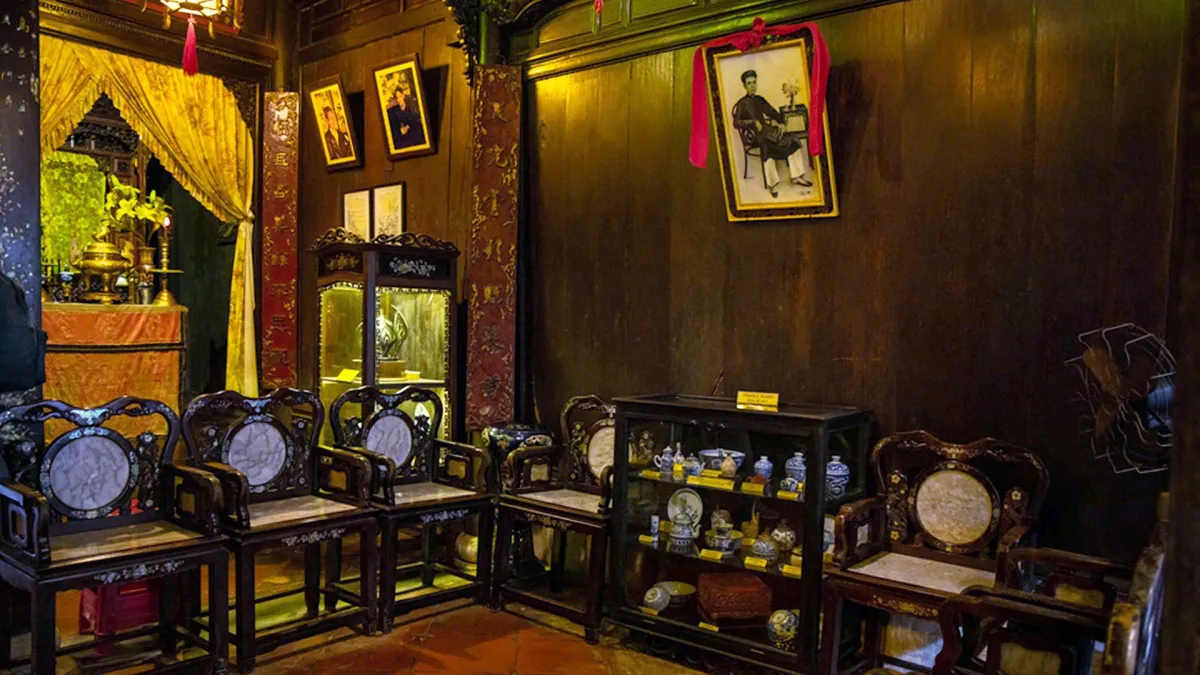
Other well-known sites include the old houses of Tan Ky, Quan Thang and Duc An, and the assembly halls of the Fujian, Chaozhou and Cantonese communities. UNESCO added Hoi An Ancient Town to its World Heritage list on December 4, 1999, as a well-preserved traditional Asian trading port where many cultures met.
Walking streets, lantern nights, boats and the night market
Plan your day around the walking-street hours, when designated streets are for people on foot only. In the Ancient Town, the walking streets run from 9:00 am to 9:30 pm in summer and from 9:00 am to 9:00 pm in winter. On Phan Chau Trinh Street, they run from 5:30 pm to 9:30 pm in summer and from 5:30 pm to 9:00 pm in winter.
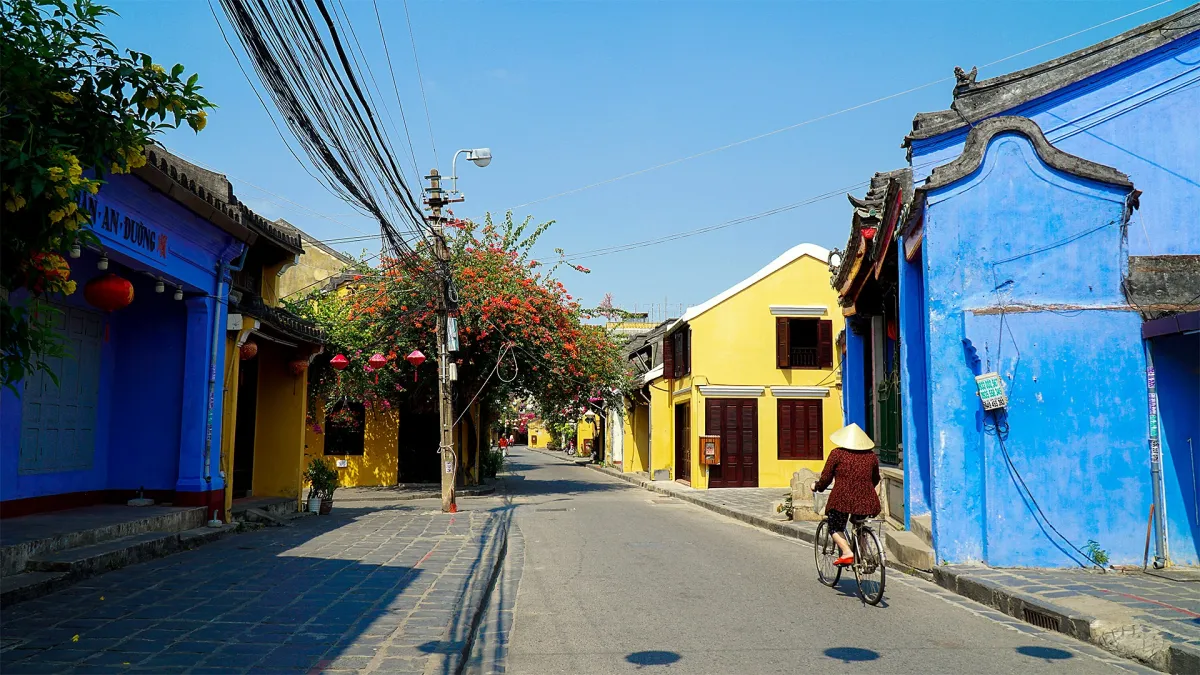
On the 14th day of each lunar month, the old town holds its Legendary Night, a tradition since 1998, when electric lights give way to candles and lanterns. Hoi An will also hold its first International Lantern Festival on December 3–6, 2026, at Hoai River Square, in the An Hoi sculpture garden and along the Hoai River.
Agree on the boat price before you get in. A city inspection on May 13, 2026, found Hoai River boat trips of about 30 minutes at an average of about 50,000 VND (about US$2) per person. It also found that many operators had not fully posted their prices, that touts were still fairly common at some tourist spots, and that booking through a hotel could cost more.
The night market runs along Nguyen Hoang Street, across the river from the Japanese Covered Bridge, and costs nothing to enter. Da Nang's city tourism website lists 5:00 pm to 11:00 pm as its reference hours; see the Hoi An night market guide for what to buy, boat prices and flood-season tips.
Floods, dress and getting there
If your Hoi An nights fall in October or November, keep your plans flexible. Hoi An's rainy season runs from September to January, and the Ancient Town can flood in October and November. At 7:00 am on October 30, 2025, the Thu Bon River at Hoi An stood at 3.32 m, above the historic peak of 1964, and the water around the Japanese Covered Bridge was estimated at nearly 2 m. See when Hoi An floods for the details.
Dress modestly at the bridge, pagodas and assembly halls, and do not smoke, eat or drink inside the heritage sites or touch the artifacts. On August 5, 2026, a guide at the Japanese Covered Bridge asked a foreign visitor in see-through clothing to leave the site.
Hoi An is about 30 km (19 miles) from central Da Nang. See how to get from Da Nang to Hoi An to compare the bus, Grab, taxi and shuttle, and pair the trip with the Marble Mountains (Ngũ Hành Sơn), about 30 minutes from Hoi An by car.
Sources and how we checked
We used the city government's fee announcements and boat inspection report, the Danang Fantasticity ticket and bridge pages, the Hoi An Museum's own pages and the heritage conservation center's sites, plus dated news reports for the restoration, kiosks, ticket checks, floods and the lantern festival, checked on October 1–2, 2026, with the tickets checked again on October 6, 2026. Where official pages disagreed, we used the most recent one and said so. US dollar amounts use Vietcombank's transfer rate of 25,800 VND per US$ on October 1, 2026, rounded to the nearest cent below US$1, US$0.5 up to US$100, US$1 up to US$10,000 and US$1,000 above that.
- Da Nang City Government (in Vietnamese): fees from August 10, 2026 (August 6, 2026); fees and exemptions from February 21, 2026 (February 13, 2026); Hoai River boat inspection (May 29, 2026); press summary of August 6, 2026.
- Danang Fantasticity: Hoi An Ancient Town entrance tickets (March 6, 2026); Japanese Covered Bridge (December 8, 2025); Hoi An Ancient Town (September 26, 2025).; six local markets, including Nguyen Hoang Night Market (in Vietnamese, June 12, 2026)
- Hoi An Museum, museum pages with hours and closing days (in Vietnamese), updated September 7, 2026.
- Hoi An World Cultural Heritage Conservation Centre: ticket notice (in English, January 2026); in Vietnamese: UNESCO listing; Legendary Night (July 8, 2025); free places in the Ancient Town.
- News reports: Van Hoa, bridge restoration (August 3, 2024) and ticket kiosks (February 9, 2026); Da Nang newspaper, ticket prices and checks (April 23, 2026); Dan Tri, flood of October 30, 2025; Tuoi Tre News, International Lantern Festival (July 31, 2026).
- Vietcombank, exchange rates, October 1, 2026.
- Photos: Danang Fantasticity, ticket page (March 6, 2026) and Japanese Covered Bridge page (December 8, 2025); Danang Fantasticity, Tan Ky ancient house (December 8, 2025); Danang Fantasticity, visiting the ancient town in 2026 (March 6, 2026).
Updated: October 6, 2026